
Which Wood Is Best for a Front Door?
The right wood for your front door depends on the look you want and how much weather the door will face. Mahogany, white oak and parota are common choices for entries exposed to the elements, while walnut and red oak suit sheltered entries and interiors especially well. Below we compare parota, walnut, mahogany, white oak and red oak so you can narrow the choice before you ask for a quote.
All of these are solid hardwoods that we build with in our Rosarito, B.C. workshop. We have more than 25 years of woodworking experience and have built over 20,000 custom doors, and the question we hear most is which wood to pick. There is no single right answer, only the best match for your home, your entry and your taste.
Each species has its own page with photos and finish ideas: mahogany doors, white oak doors, walnut doors and parota doors.
Wood Comparison Table
These are general guidelines. Every board is different, and finish, design and exposure matter as much as the species.
| Wood | Appearance | Typical use | Coastal and humid climates | Keep in mind |
|---|---|---|---|---|
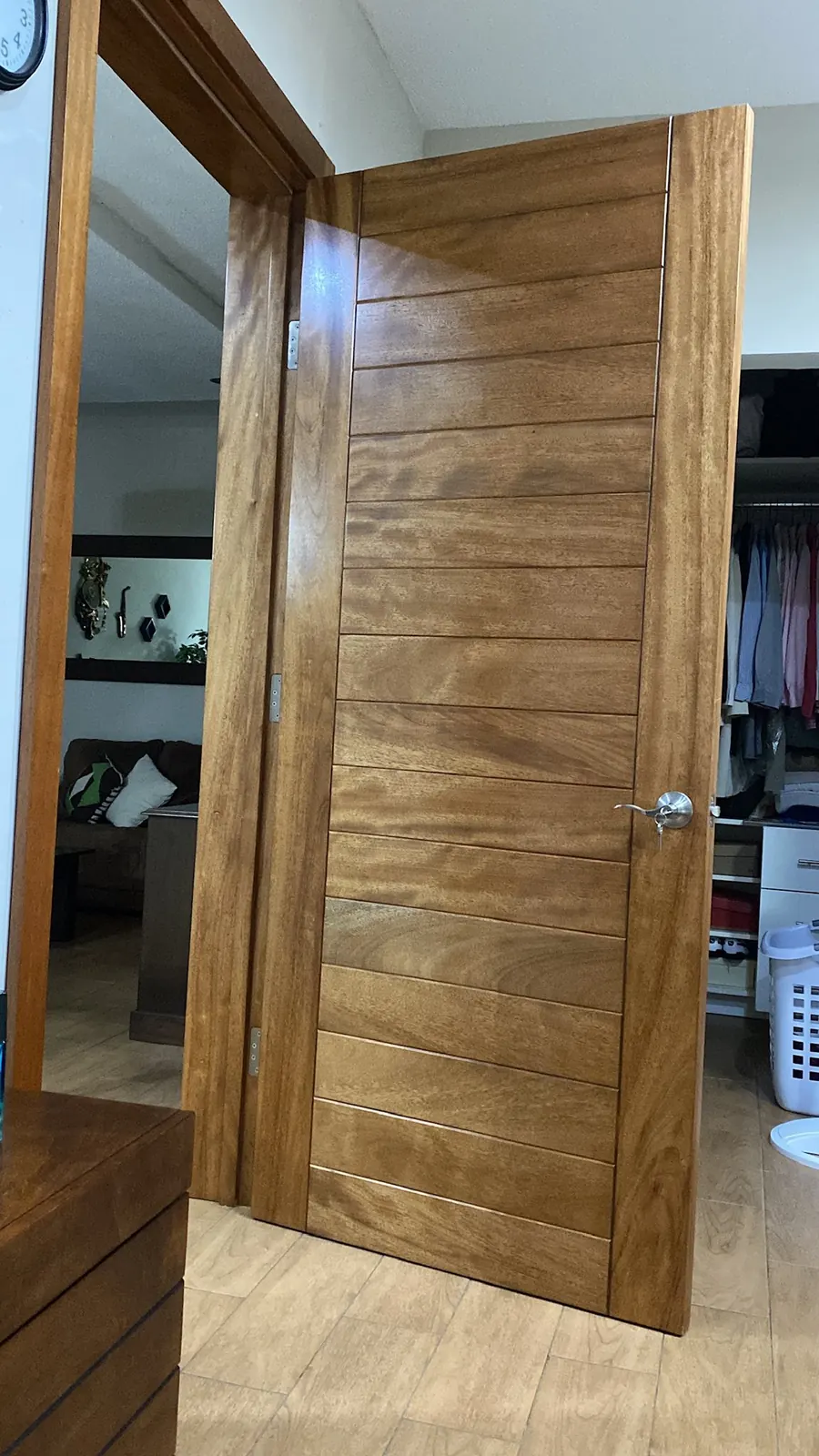
| Parota | Golden to chocolate brown, with bold, flowing or wavy grain. | Entry and interior doors where the grain is the main feature. | A dense, stable hardwood native to Mexico; a good finish and a covered entry help it last. | Grain varies a lot from board to board, so each door is unique. |
| Walnut | Rich chocolate to dark brown, with straight to figured grain. | Statement interior doors and sheltered entries. | Best under a porch or overhang; strong sun can slowly change the tone of dark woods. | A deep, formal look that pairs well with light walls and dark hardware. |
| Mahogany | Reddish brown that deepens with age, with fine, fairly even grain. | Classic entry doors, double doors and pivot doors. | Long used for exterior doors; a good finish keeps it looking its best near the coast. | A warm, traditional tone that suits both rustic and refined designs. |
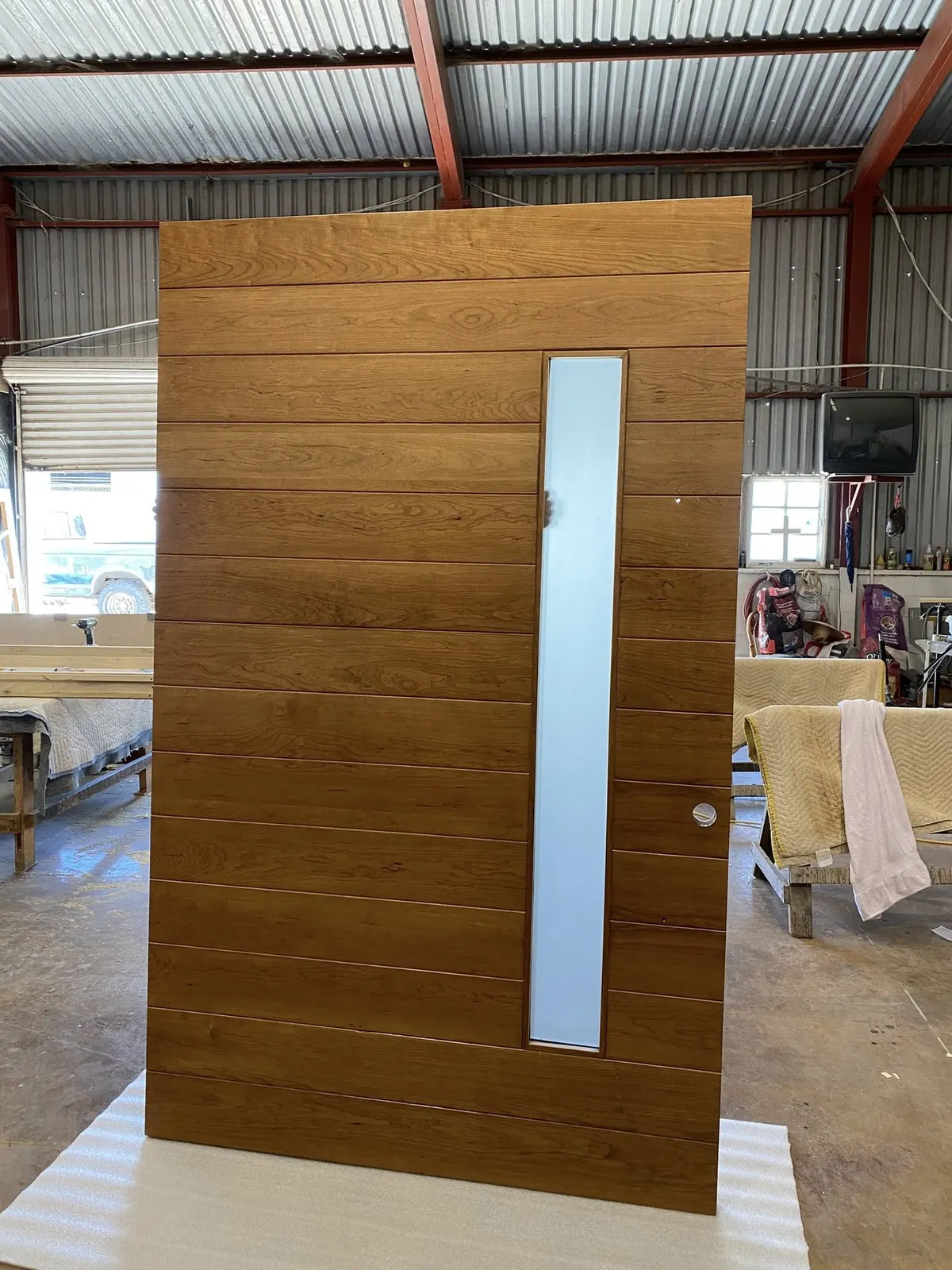
| White oak | Light tan to golden brown, with a clean, straight grain. | Modern entries, pivot doors and interiors. | Its tight grain makes it more resistant to moisture than red oak, but finish still matters. | A calm, contemporary look that takes light and dark stains well. |
| Red oak | Warm tan with a pinkish-red tone and a pronounced open grain. | Interior doors and covered or sheltered entries. | Its open grain absorbs moisture more readily, so protect it well and keep it covered. | A traditional, familiar grain pattern that takes stain evenly. |
White Oak vs Walnut
White oak runs from light tan to golden brown with a clean, straight grain, while walnut is chocolate to dark brown and more formal. Pick white oak for a bright, calm look and plenty of stain options, and walnut for a deep surface that does best under shelter. See our white oak doors and walnut doors pages.
Mahogany vs White Oak
Mahogany is a reddish brown with a fine, even grain that deepens with age, a natural fit for classic entries and double doors. White oak is lighter with a straighter grain and suits modern entries and pivot doors. Either can be finished for an exposed entry. Compare mahogany doors with white oak doors.
Parota vs Mahogany
Parota is a native Mexican hardwood with bold, flowing golden-to-chocolate grain, so the grain is the feature. Mahogany is quieter, with an even grain and a reddish tone. Parota suits a rustic or distinctly Mexican look, mahogany a traditional one. See parota doors and mahogany doors.
How to Choose by Style and Use
For a bold, warm look
If you want grain that stands out, look at parota or walnut. Parota brings flowing golden-to-chocolate patterns; walnut is darker and more formal. A simple flat panel is often enough because the wood does the talking.
For a clean, modern look
White oak is a favorite for contemporary homes thanks to its calm, light tone and straight grain. It is a natural fit for a pivot door, where a large, simple surface shows off the wood.
For a classic entry
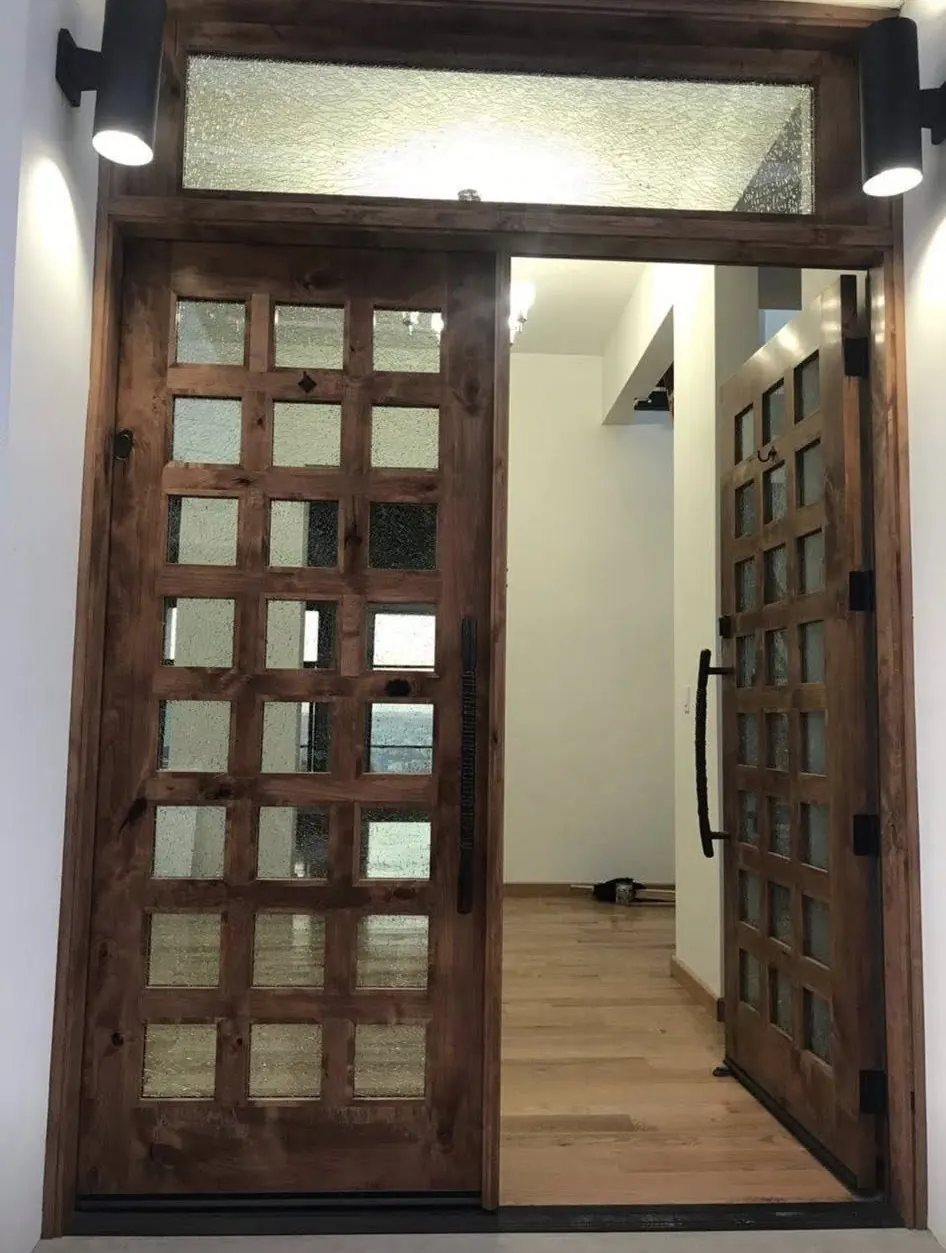
Mahogany is a traditional choice for a grand double entry door or a door with sidelights, with a reddish tone that deepens gracefully over time. Red oak and white oak also work for classic designs, depending on the stain you prefer.
Other woods on request
We can also build in maple, cherry and alder on request. Tell us the look you are after and we will recommend the best fit.
Best Wood for Exterior Doors Near the Coast
Near the ocean, doors deal with humidity, salt in the air and strong sun. In that setting the finish and the way the door is protected usually matter more than the species alone. A well-finished door under a covered entry will generally do better than any wood left fully exposed.
- Give the door some shelter if you can, such as a porch, overhang or recessed entry.
- Choose a finish made for exterior use and plan to refresh it from time to time.
- Pick denser, tighter-grained woods such as mahogany, white oak or parota for exposed entries.
- Wipe off salt and dust gently and check the finish every season.
Our wood door care guide covers cleaning and maintenance step by step, and we also offer restoration and refinishing if a door needs a refresh.
How Wood Choice Affects Your Quote
Every project is custom-quoted, and the species you choose is one of several things that shape the quote, along with size, design, glass or ironwork, finish and installation. Our door cost guide explains each factor. Quotes are free.
Most doors take about 2 to 3 weeks to build. The time varies with size, wood, design and finish, and the schedule is confirmed in your written quote. See what else we do on our services page or browse our gallery for ideas.
Wood Choice FAQ
What is the best wood for a front door?
It depends on your style and exposure. Mahogany, white oak and parota are common choices for exposed entries, while walnut and red oak suit sheltered entries and interiors.
Which wood is best near the coast?
Denser, tighter-grained woods such as mahogany, white oak and parota are common picks, but the finish and a covered entry matter as much as the species.
What is the best wood for a front door in a coastal climate?
For a coastal entry, the finish and a covered doorway matter as much as the species. Dense, tighter-grained woods such as mahogany, white oak and parota are common picks. Give the door shelter and refresh the finish as it ages; our door care guide shows how.
Can I use the same wood inside and outside?
Yes. Many homeowners choose one wood for the entry and for the interior doors so the tone carries through the house. We can build matching runs of doors.
Do you work with maple, cherry or alder?
Yes, we can build in maple, cherry and alder on request, in addition to parota, walnut, mahogany, white oak and red oak.
How does wood choice change the price?
Every project is custom-quoted, so we do not publish prices. The wood is one factor alongside size, design, finish and installation. Quotes are free.